Electrical testing and tagging is the foundation of workplace electrical safety compliance in New Zealand, and it’s the service CPM Test n Tag and Fire Safety was built on. Led by Peter Mahon — a Licensed Aeronautical Mechanical Engineer with over 50 years in the electrical industry and former Divisional Franchisor for New Zealand’s largest test and tag network — CPM brings genuine technical depth to a service many providers treat as a box-ticking exercise.
Whether you run a busy workshop, a professional office, a construction site, or a retail premises, our EST-trained technicians test, tag, and certify your electrical equipment to AS/NZS 3760:2022, giving you clear evidence of compliance and one less thing to worry about.
What Is Electrical Testing and Tagging?
Electrical testing and tagging is the process of inspecting, testing, and labelling in-service electrical equipment to confirm it’s safe for continued use. It covers any appliance with a plug or flexible cord — from office computers and kitchen appliances through to workshop power tools and construction site equipment.
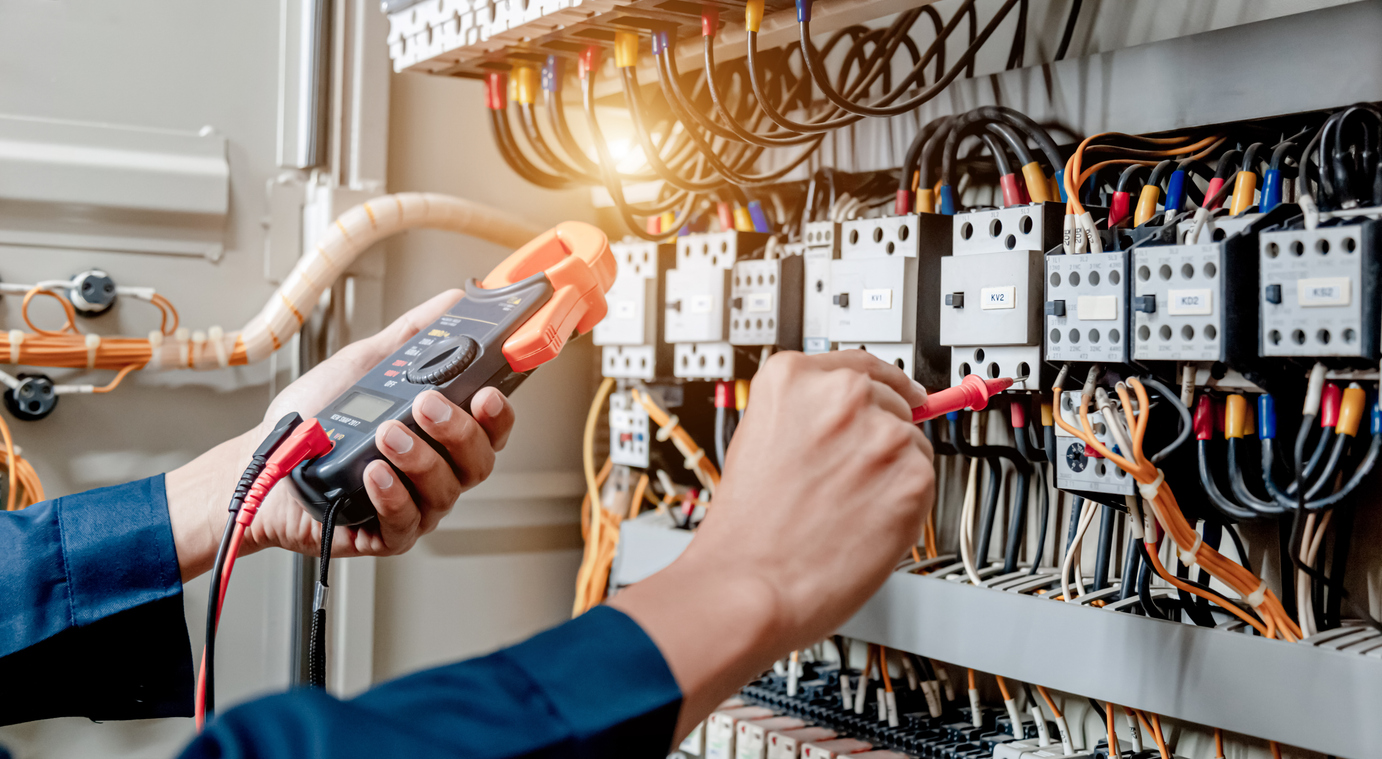
Each item undergoes a visual inspection for damage such as worn cords, cracked casings, or damaged plugs, followed by electrical safety testing using calibrated equipment to check earth continuity, insulation resistance, and polarity. Equipment that passes receives a durable tag showing the test date and next due date. Equipment that fails is clearly identified and removed from service, with a straightforward explanation of what needs to happen next.
The governing standard is AS/NZS 3760:2022, the current joint Australian and New Zealand standard for in-service safety inspection and testing of electrical equipment. Construction and demolition sites are additionally governed by AS/NZS 3012.
Why Electrical Testing and Tagging Matters for Your Business
Meeting Your Legal Obligations
Under the Health and Safety at Work Act 2015, businesses have a duty to manage risks to health and safety in the workplace, including electrical risks. WorkSafe NZ expects employers to take reasonably practicable steps to keep equipment safe, and regular electrical testing and tagging is one of the clearest ways to demonstrate you’re meeting that duty.
Reducing the Risk of Electrical Accidents
Worn cords, cracked casings, damaged plugs, and internal faults aren’t always visible, and any one of them can lead to electric shock, injury, or fire. Regular testing catches these issues before they cause harm, rather than after.
Supporting Insurance and Audit Requirements
Many insurers expect evidence of electrical safety compliance as a condition of cover, and auditors increasingly ask for documented testing records. CPM’s compliance reports give you that evidence in a format ready for both.
Protecting Your Team and Your Operations
Beyond the legal and insurance case, a workplace equipment failure — whether it’s a fire, a shock, or simply gear going out of action — costs time, money, and trust. Regular testing is a small, predictable cost that protects against a much larger, unpredictable one.
What Our Electrical Testing and Tagging Services Include
Every CPM electrical testing and tagging visit includes a thorough visual inspection of all equipment for visible damage or wear, electrical safety testing using calibrated testing equipment covering earth continuity, insulation resistance, and polarity, durable tagging showing pass or fail status and the next test due date, a detailed compliance report for your records, audits, or insurance requirements, and automatic reminders ahead of your next testing interval, so retesting deadlines don’t catch you off guard.
Passed equipment is tagged and ready to keep working. Failed equipment is clearly identified, removed from service, and explained to you in plain terms, including whether it needs replacing or can be repaired and retested by a qualified third party.
Equipment We Test
| Category | Equipment Types |
|---|---|
| Workshop Tools | Power tools, portable machinery, extension leads |
| Office Equipment | Computers, monitors, chargers, printers |
| Kitchen and Hospitality Appliances | Microwaves, kettles, coffee machines, urns |
| Safety and Power Equipment | Extension leads, power boards, portable RCDs |
| Specialized Items | Hire equipment, third-party repaired appliances, second-hand equipment |
| Not sure what needs testing? | Our technicians will assess your site and advise exactly what falls under AS/NZS 3760:2022. |
Who Needs Electrical Testing and Tagging?
Any business with plug-in electrical equipment has a role to play in workplace electrical safety, but the risk profile varies significantly by industry. Offices and professional services typically have lower-risk equipment tested on a longer cycle, while hospitality venues, workshops, manufacturing facilities, and construction sites work with equipment that sees heavier use, harsher conditions, or higher failure consequences, and are tested more frequently as a result. Retail premises, healthcare facilities, and warehouses each carry their own mix of equipment and compliance obligations. Wherever your business sits, CPM’s technicians assess your specific equipment and environment when providing electrical testing and tagging services, rather than applying a one-size-fits-all schedule.
Accurate Results from Calibrated Equipment
Electrical testing is only as reliable as the equipment used to carry it out. CPM technicians test using calibrated testing equipment maintained to strict calibration schedules, so the pass or fail result you receive reflects the true condition of your equipment, not the accuracy of the tester. Combined with EST-trained technicians who understand what they’re looking for during the visual inspection stage, this gives you testing you can rely on for audits, insurance, and your own peace of mind.
How Often Does Electrical Equipment Need Testing?
Testing intervals under AS/NZS 3760:2022 and AS/NZS 3012 depend on the environment your equipment operates in, with higher-risk environments requiring more frequent testing.
| Environment Type | Recommended Interval |
|---|---|
| Construction and demolition sites | Every 3 months |
| Manufacturing and workshop environments | Every 6 months |
| Hostile environments (moisture, heat, or vibration) | Every 12 months |
| Standard office environments | Every 5 years |
| Residential-type accommodation | Every 2 years |
| Hire equipment | Before each hire, and every 3 months |
| Equipment repaired by a third party | Before returning to service |
We set up automatic reminders for every piece of equipment we test, so you’re notified well ahead of the next due date rather than discovering a compliance gap during an audit.
Electrical Testing and Tagging vs Related Electrical Compliance Services
Electrical testing and tagging is sometimes used interchangeably with Portable Appliance Testing, and in practice the two overlap significantly, with both involving testing portable electrical equipment to AS/NZS 3760:2022. CPM also provides RCD safety switch testing, which checks that your residual current devices are tripping correctly to protect against electric shock, and earth fault loop impedance testing, which confirms your fixed wiring provides adequate fault protection. These are related but distinct compliance requirements, and many businesses arrange them together with their electrical testing and tagging visit to minimise disruption and keep all their electrical compliance on one schedule.
Our Electrical Testing and Tagging Process
- Book an Assessment — Tell us about your site, industry, and equipment so we can scope the visit accurately.
- On-Site Testing — Our EST-trained technician inspects and tests your equipment on-site, working efficiently to limit disruption to your day.
- Tagging and Reporting — Every item is tagged with its result and next due date, and you receive a full compliance report for your records.
- Ongoing Reminders — We track your next testing date and remind you ahead of time, so compliance stays on autopilot.
Why Choose CPM Test n Tag & Fire Safety?
CPM Test n Tag and Fire Safety was founded by Peter and Callum Mahon to build a franchise system designed specifically for the New Zealand market. Peter brings over 50 years of electrical industry experience and Licensed Aeronautical Mechanical Engineer (LAME) qualifications, and previously served as Divisional Franchisor for Jim’s Test & Tag, giving CPM a level of technical depth and franchise system knowledge that’s rare in this industry.
Every CPM technician is EST-trained, police-checked, and first aid certified, and every visit is backed by comprehensive compliance documentation and automatic retesting reminders.
CPM also offers comprehensive fire safety inspection services, including fire extinguisher inspection, fire hose reel testing, and fire blanket inspection, so your electrical and fire safety compliance can be managed through a single, trusted provider rather than juggling multiple contractors.
Frequently Asked Questions
How much does electrical testing and tagging cost?
Pricing depends on the number and type of items being tested, your industry, and how often testing is required. We provide free, no-obligation quotes so you know exactly what to expect before booking.
Do I need to be on-site while testing takes place?
It’s helpful to have someone available to give our technician access to your premises and equipment, but you don’t need to be present for the entire visit. We’ll talk through the details when you book.
What happens if a piece of equipment fails testing?
Failed equipment is clearly tagged and removed from service, and we’ll explain why it failed and what your options are. CPM doesn’t carry out repairs itself, but we’re happy to retest equipment once it’s been repaired by a qualified third party.
Is electrical testing and tagging a legal requirement?
Under the Health and Safety at Work Act 2015, businesses have a duty to manage electrical risks in the workplace, and regular testing to AS/NZS 3760:2022 is the standard way to demonstrate that duty is being met. Requirements can vary by industry and insurer, so if you’re unsure what applies to your business, we’re happy to advise.
How long does a testing visit take?
It depends on how much equipment you have and how it’s spread across your site. Let us know your equipment volume when you book and we’ll give you a realistic time estimate.
Can I test my own equipment instead of hiring a provider?
Some businesses do bring testing in-house, but it requires calibrated equipment, proper training, and ongoing recalibration to stay compliant. Most businesses find it’s more cost-effective and reliable to use a specialist provider, and it removes the risk of misjudging a compliance requirement.
What’s the difference between AS/NZS 3760 and AS/NZS 3012?
AS/NZS 3760:2022 is the general standard for in-service testing of electrical equipment and applies to most workplaces. AS/NZS 3012 applies specifically to construction and demolition sites, where equipment faces harsher conditions and requires more frequent testing. If your business operates on construction sites as well as a regular premises, both standards may apply to different parts of your operation.
I already have an electrician check my wiring. Do I still need test and tag?
Yes. An electrician’s inspection of your fixed wiring is a separate obligation to electrical testing and tagging, which covers portable, plug-in equipment rather than the building’s fixed electrical installation. Most businesses need both to be fully compliant.
Areas We Serve
CPM Test n Tag and Fire Safety provides electrical testing and tagging across the North Island. Find your region and local coverage on our areas we serve page.
Get a Free Quote for Electrical Testing and Tagging
Keep your workplace compliant and your team protected. Contact CPM Test n Tag and Fire Safety today for a free, no-obligation quote on electrical testing and tagging services for your business.