
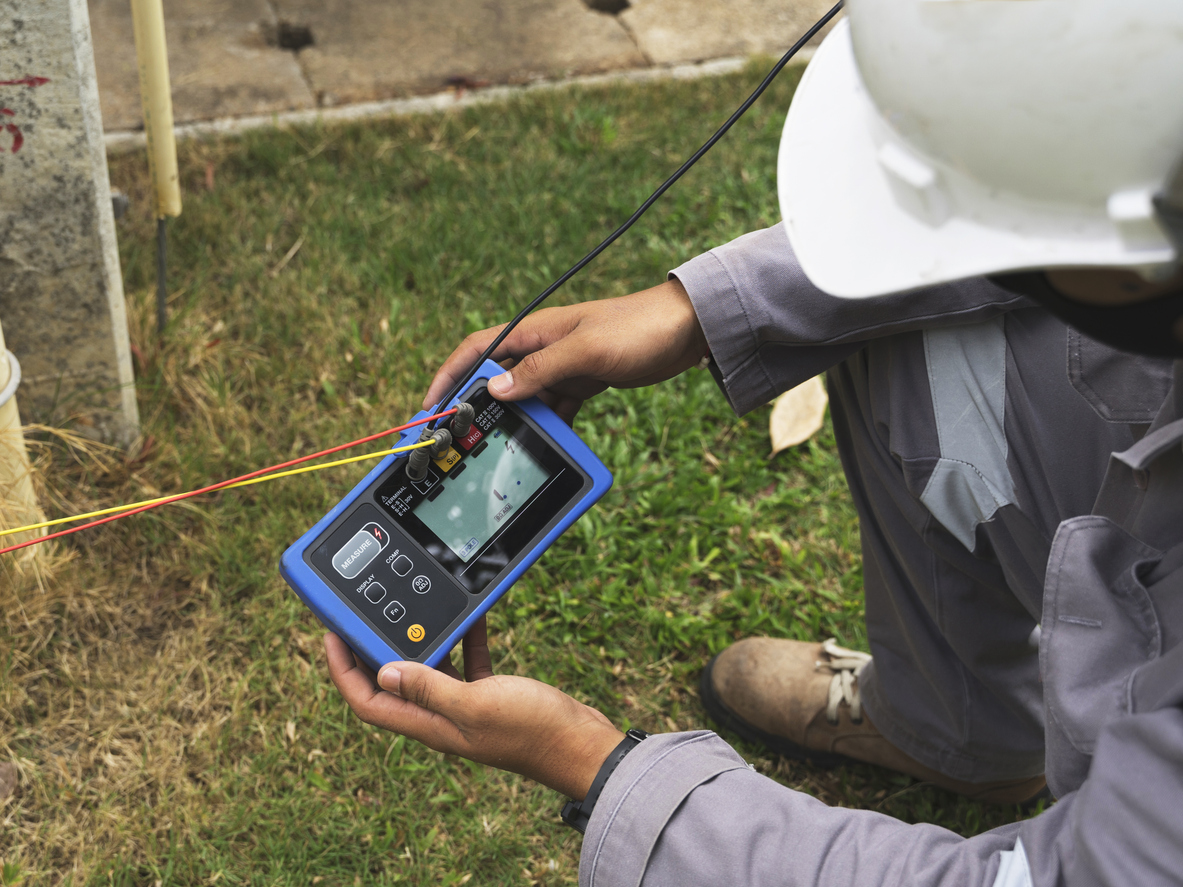
Protect your workplace from electrical fires and circuit failures with professional earth fault loop impedance testing from CPM Test n Tag and Fire Safety. Our certified technicians use specialised testing equipment to verify your electrical installations meet AS/NZS 3000 safety standards, ensuring circuit protection devices operate correctly when faults occur.
What Is Earth Fault Loop Impedance Testing?
Earth fault loop impedance testing—also called loop impedance testing or EFLI testing—measures the total resistance in the earth fault current path of your electrical circuits. This critical test verifies that when an electrical fault occurs, sufficient current will flow through the earth return circuit to trigger your circuit breakers or fuses quickly enough to prevent overheating, fires, and electrical hazards.
Think of your earth return circuit as a safety escape route for fault current. When an electrical fault happens—such as damaged insulation causing current to flow where it shouldn’t—the electricity needs a clear, low-resistance path back to the ground. If this path has too much resistance (high impedance), the fault current may be too weak to trigger your protective devices, allowing the fault to continue undetected while circuits overheat and fire risks escalate.
This test answers two essential questions: Will your circuit breaker or fuse operate when a fault occurs? Will it operate quickly enough to prevent dangerous situations?
Why Earth Fault Loop Impedance Test Is Essential
Prevent Electrical Fires and Equipment Damage
Undetected fault current is a leading cause of electrical fires in New Zealand workplaces. When circuit protection fails to operate correctly, fault currents generate excessive heat in wiring and equipment, creating fire hazards that endanger lives and property. Regular testing ensures your protective devices will respond appropriately when needed.
Comply with AS/NZS 3000 Wiring Standards
The AS/NZS 3000 Wiring Rules—New Zealand’s electrical installation standard—specifically requires earth fault loop impedance verification for electrical installations. Testing ensures your circuits meet the standard’s maximum impedance values, demonstrating compliance with workplace safety regulations and electrical safety requirements.
Verify Circuit Protection Effectiveness
Installing circuit breakers and fuses isn’t enough—you need confirmation they’ll actually operate when required. Earth fault loop impedance testing provides measurable proof that your protective devices can detect and disconnect fault currents within the timeframes specified by safety standards, typically within 0.4 to 5 seconds depending on the circuit type.
Protect Business Operations
Electrical faults that go undetected can cause catastrophic equipment failures, production downtime, and costly repairs. By identifying circuits with inadequate earth paths before problems escalate, loop impedance testing helps you maintain operational continuity and avoid emergency shutdowns.
Support Insurance and Liability Requirements
Many insurance providers require documented proof of electrical safety compliance. Professional testing delivers comprehensive records that satisfy insurance requirements while protecting your business from liability in the event of electrical incidents.
Understanding the Earth Fault Loop
To appreciate what earth fault loop impedance testing measures, it helps to understand the components that make up the earth fault loop:
The earth fault loop is the complete path that fault current travels when an electrical fault occurs. In New Zealand’s MEN (Multiple Earthed Neutral) system, this path includes the supply transformer winding, the active conductor from the transformer to the fault location, the fault itself (typically where an active conductor contacts an earthed part), the protective earthing conductor back to the main earthing point, and the earth connection back to the transformer neutral.
The total impedance of this entire loop determines how much current will flow during a fault. Lower impedance means higher fault current, which ensures protective devices operate quickly. Higher impedance means lower fault current, which may not be sufficient to trip circuit breakers or blow fuses within safe timeframes.
Our Earth Fault Loop Impedance Testing Process
1. Site Assessment and Circuit Identification
Our technicians begin by identifying all circuits requiring testing, reviewing your electrical installation layout, and determining appropriate test points throughout your facility. We coordinate with your team to schedule testing during periods that minimise operational disruption.
2. Power Point and Outlet Testing
Using calibrated earth fault loop impedance testers, we measure impedance values at power outlets and connection points throughout your electrical installation. Tests are conducted at the furthest points from the supply on each circuit branch, as these locations typically have the highest impedance values and represent the worst-case scenario for fault current flow.
3. Impedance Measurement and Analysis
Our testing equipment measures both the external impedance (Ze) from the supply transformer to your installation’s main earthing point, and the total system impedance (Zs) including the internal circuit wiring. These measurements are compared against the maximum permitted values specified in AS/NZS 3000 for your specific protective device types and ratings.
4. Protective Device Verification
We verify that measured impedance values are low enough to ensure your circuit breakers, fuses, or RCDs will operate within required disconnection times. This confirms your protective devices provide adequate fault protection for the specific circuits they’re protecting.
5. Comprehensive Documentation
You receive detailed test reports documenting all measured impedance values, comparison against AS/NZS 3000 requirements, identification of any circuits exceeding maximum impedance limits, and specific recommendations for remedial work where required. All results are recorded for your compliance records and future reference.
When Earth Fault Loop Impedance Test Is Required
New Electrical Installations
AS/NZS 3000 requires earth fault loop impedance verification as part of the mandatory testing for all new electrical installations before they’re energised and put into service. This ensures safety standards are met from the outset.
Circuit Modifications and Extensions
When extending existing circuits, adding new power outlets, or modifying electrical installations, testing verifies that changes haven’t compromised the earth fault loop. Longer cable runs increase impedance, potentially affecting protective device operation.
Routine Maintenance and Safety Audits
Regular testing as part of scheduled maintenance programmes helps identify deterioration in earth connections, corroded terminals, or damaged protective conductors before they create hazardous conditions.
Before Portable Appliance Testing
At CPM Test n Tag and Fire Safety, we verify the earth fault loop impedance of power outlets before conducting portable appliance testing. Our portable appliance testers rely on adequate earth fault loop impedance for accurate results, so we ensure the testing environment itself is safe and will provide reliable measurements.
Following Electrical Incidents
After electrical faults, circuit breaker trips, or other electrical incidents, testing helps identify whether inadequate earth fault loop impedance contributed to the problem and verifies the circuit is safe for continued operation.
Compliance Verification
When preparing for WorkSafe audits, insurance assessments, or health and safety reviews, earth fault loop impedance testing provides documented evidence of electrical safety compliance.
Testing Standards and Requirements
AS/NZS 3000 Wiring Rules
AS/NZS 3000 is the joint Australian and New Zealand standard governing electrical installation design, construction, and verification. The standard specifies maximum earth fault loop impedance values based on protective device type, rating, and circuit application. Our testing ensures your installations meet these requirements.
AS/NZS 3017 Verification Standards
AS/NZS 3017 provides detailed guidelines for inspection and testing procedures to verify electrical installations comply with AS/NZS 3000 requirements. This standard outlines specific methods for measuring earth fault loop impedance and interpreting results.
Disconnection Time Requirements
For 230V final subcircuits, AS/NZS 3000 requires automatic disconnection within 0.4 seconds for socket outlets with rated currents less than 63A, Class 1 equipment (protectively earthed), and portable equipment moved during operation. For other circuits, disconnection within 5 seconds is acceptable provided people aren’t exposed to unsafe touch voltages.
Common Issues Identified Through Testing
High Impedance Values
Excessive impedance in the earth fault loop prevents adequate fault current flow, meaning protective devices may not operate or may take too long to disconnect supply. Common causes include undersized earth conductors, long cable runs without adequate conductor sizing, poor quality connections and terminations, and corroded or damaged earth connections.
Inadequate Earthing Systems
Some installations have insufficient earthing infrastructure, including poorly connected earth electrodes, corroded earth stakes or rods, inadequate bonding between exposed metalwork, and missing or damaged protective earthing conductors.
Incorrectly Rated Protective Devices
Testing sometimes reveals protective devices that are incorrectly specified for the circuit they’re protecting, making it impossible to achieve compliant disconnection times regardless of earth path quality.
Circuit Extension Problems
Extending existing circuits without properly calculating the impact on earth fault loop impedance often results in non-compliant installations where the original protective device can’t operate quickly enough on the extended circuit.
Why Choose CPM Test n Tag and Fire Safety
Specialised Testing Equipment
We invest in calibrated, professional-grade earth fault loop impedance testers that deliver accurate, reliable measurements. Our equipment is regularly maintained and calibrated to ensure measurement precision and compliance with testing standards.
Qualified, Experienced Technicians
Our team understands the technical requirements of AS/NZS 3000 and AS/NZS 3017, interpreting test results correctly and providing practical recommendations for any issues identified. We explain technical findings in clear language so you understand your electrical installation’s safety status.
Comprehensive Electrical Safety Services
Earth fault loop impedance test integrates seamlessly with our other services including electrical testing and tagging, RCD testing, and fire safety inspections. We can address multiple compliance requirements in a single visit, saving you time and coordination effort.
Minimal Operational Disruption
We understand business continuity matters. Our technicians work efficiently and can schedule testing during quiet periods, after hours, or on weekends to minimise impact on your operations. Most testing is conducted with minimal interruption to normal activities.
Clear, Actionable Reporting
Our test reports present technical information in an accessible format, clearly identifying any issues requiring attention and providing specific recommendations for remedial work. You’ll understand exactly what the results mean for your workplace safety and compliance status.
Fully Mobile Service
As a mobile testing service, we come to your location anywhere across Auckland North, Waikato, Bay of Plenty, and Manawatū–Whanganui regions. No need to transport equipment or coordinate off-site testing—we bring professional testing services directly to your workplace.
The Connection Between Earth Fault Loop Impedance and Fire Safety
Electrical faults are a significant cause of workplace fires in New Zealand. When fault current flows but protective devices fail to disconnect supply quickly enough, the sustained current generates excessive heat in conductors, connections, and equipment. This heat can ignite insulation, nearby combustible materials, or cause equipment to catch fire.
Earth fault loop impedance test directly addresses this fire risk by verifying that circuit protection will operate before dangerous heat levels develop. By ensuring rapid fault disconnection, proper earth fault loop impedance helps prevent the conditions that lead to electrical fires, complementing other fire safety measures like fire extinguisher inspections and fire protection equipment testing.
Frequently Asked Questions
Is earth fault loop impedance testing mandatory?
AS/NZS 3000 requires earth fault loop impedance verification for new installations and circuit modifications. While ongoing periodic testing isn’t specifically mandated, it’s recognised best practice for demonstrating compliance with workplace health and safety obligations.
How often should loop impedance testing be conducted?
Testing frequency depends on your workplace environment and risk profile. Many organisations include earth fault loop impedance test as part of annual electrical maintenance programmes. High-risk environments or installations with known issues may warrant more frequent testing.
Who can perform earth fault loop impedance test?
Testing should be conducted by competent persons with appropriate knowledge of electrical systems and safety standards. While registration as an electrical worker isn’t always required for testing, interpreting results and addressing identified issues often requires qualified electrician involvement.
Can RCDs replace the need for loop impedance testing?
No. While RCDs (Residual Current Devices) provide additional protection, they don’t eliminate the need to verify earth fault loop impedance. Even RCD-protected circuits require adequate earth paths, and AS/NZS 3000 still requires impedance verification for installation compliance.
What happens if my circuits fail testing?
Failed circuits require remedial work by a registered electrician. Common solutions include installing supplementary earthing conductors, upgrading to larger protective earthing conductors, improving earth electrode systems, or in some cases, replacing protective devices with appropriately rated alternatives. We provide clear recommendations for addressing any issues identified.
How long does testing take?
Testing duration depends on the size and complexity of your electrical installation. Individual outlet tests take just minutes, but comprehensive facility testing may require several hours or a full day for larger sites. We’ll provide time estimates when quoting for your specific requirements.
Protect Your Workplace with Professional Earth Fault Loop Impedance Testing
Don’t leave circuit protection to chance. Professional earth fault loop impedance testing from CPM Test n Tag and Fire Safety provides measurable confidence that your electrical systems will respond correctly when faults occur, protecting your team, property, and business operations.
Whether you’re verifying new installations, maintaining existing systems, or preparing for compliance audits, our experienced technicians deliver accurate, reliable testing services with clear documentation and practical recommendations.
Contact CPM Test n Tag and Fire Safety today for:
- Free quotes tailored to your facility’s requirements
- Professional earth fault loop impedance testing to AS/NZS 3000 standards
- Fast scheduling with flexible timing options
- Service across Auckland North, Waikato, Bay of Plenty, and Manawatū–Whanganui regions
- Comprehensive testing services addressing multiple compliance requirements
- Clear, detailed reporting with actionable recommendations
Call us on 027 241-5500 or contact our team to discuss your earth fault loop impedance test needs. Our qualified technicians are ready to help you verify circuit protection, maintain compliance, and protect your workplace from electrical hazards.